Erie Driveway Paving: Asphalt Driveway Replacement in Erie, PA
Erie Driveway Paving is an asphalt paving contractor doing asphalt driveway replacement, resurfacing and overlays, patching and repair, new driveway paving, sealcoating and crack filling, parking lot paving, gravel to asphalt conversion, and driveway extensions. Our customers own houses, rental property, farm lanes, churches, and small commercial lots across Erie, Millcreek, Harborcreek, Fairview, Girard, North East, Edinboro, Waterford, Wesleyville, and the rest of Erie County, Pennsylvania.
A replacement here means the old surface comes out and leaves as reclaimed asphalt pavement. Then roughly six to eight inches of 2A modified stone goes down in compacted lifts on a compacted subgrade. Hot mix asphalt follows in two courses, a binder course of coarse mix carrying the load and a finer surface course on top, each one rolled hot with a steel drum roller. The written quote carries the square footage, the compacted base depth, and the compacted asphalt depth. The other version of this job is two inches of hot mix rolled over a driveway that is already cracked through.
Call for a Free Estimate- Licensed and insured in PA
- Full-depth tear-out and haul-off
- 2A modified stone base, compacted in lifts
- Binder course and surface course, not one thin mat
- Erie County and northwest Pennsylvania
Asphalt Driveway Replacement
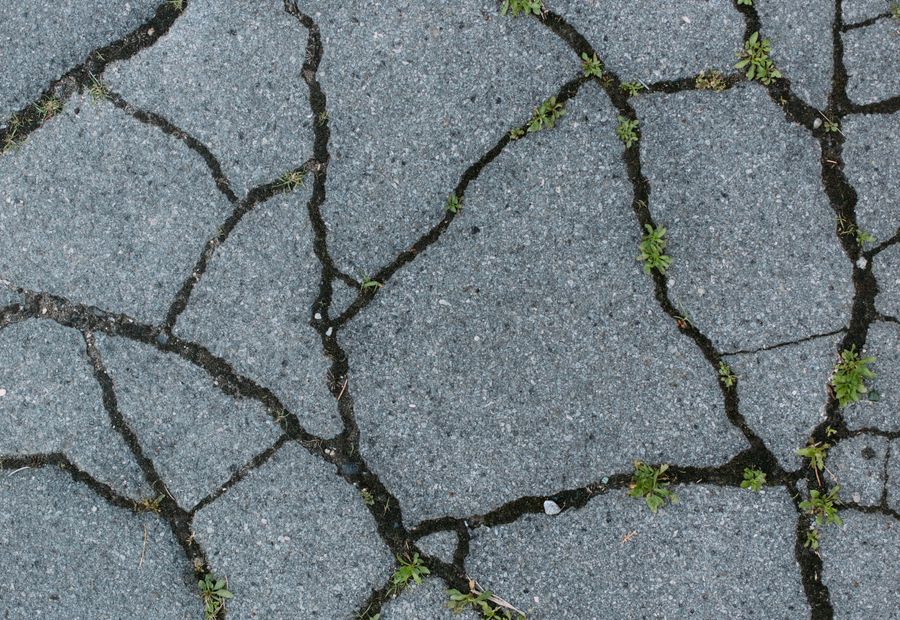
A driveway with a web of connected cracks across it has a base problem, not a surface problem. The ground under the asphalt moves when a car rolls over it, and the asphalt breaks because it has nothing solid to sit on.
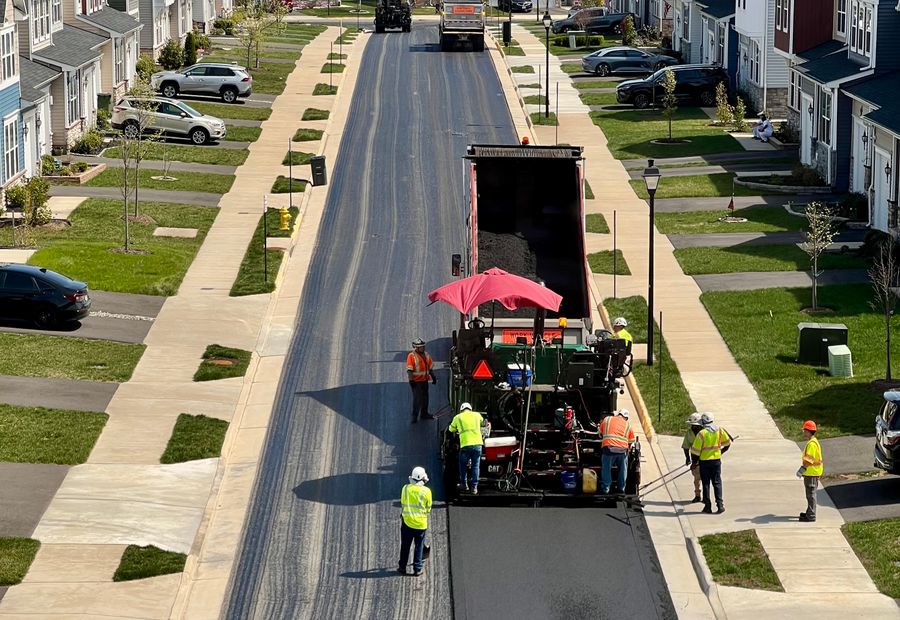
Replacement takes the old surface off, rebuilds the stone underneath, resets the grade at the garage and the street, and paves in two courses. It is the only fix that reaches the actual failure. More on asphalt driveway replacement.
Asphalt Resurfacing and Overlays
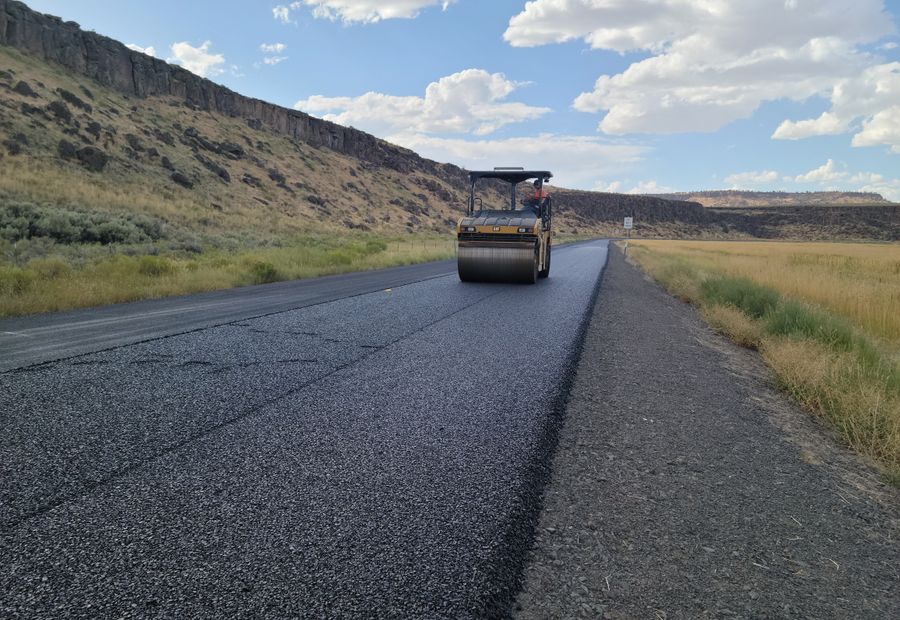
An overlay puts a new two inch surface course on the driveway you already have. It borrows the strength of what is underneath, so it works when the base is sound, the water runs off, and the cracking is straight rather than webbed.
Edges get milled at the garage and the apron so the finished height stays put. Tack coat bonds the new mat to the old. Failed sections get patched full depth before any paving starts. More on resurfacing and overlays.
Asphalt Patching and Repair
A pothole is a hole in the base that finally worked its way to the surface. We saw cut it square, dig to ground that holds, and fill it with hot mix compacted in place. Cold patch out of a bag is a winter stopgap, and we will tell you when that is all a driveway needs until spring.
Working cracks get cleaned and filled with hot rubberized filler. Sunken sections, crumbled edges, aprons, and utility trench cuts all get rebuilt from below. More on driveway repair.
New Driveway Paving
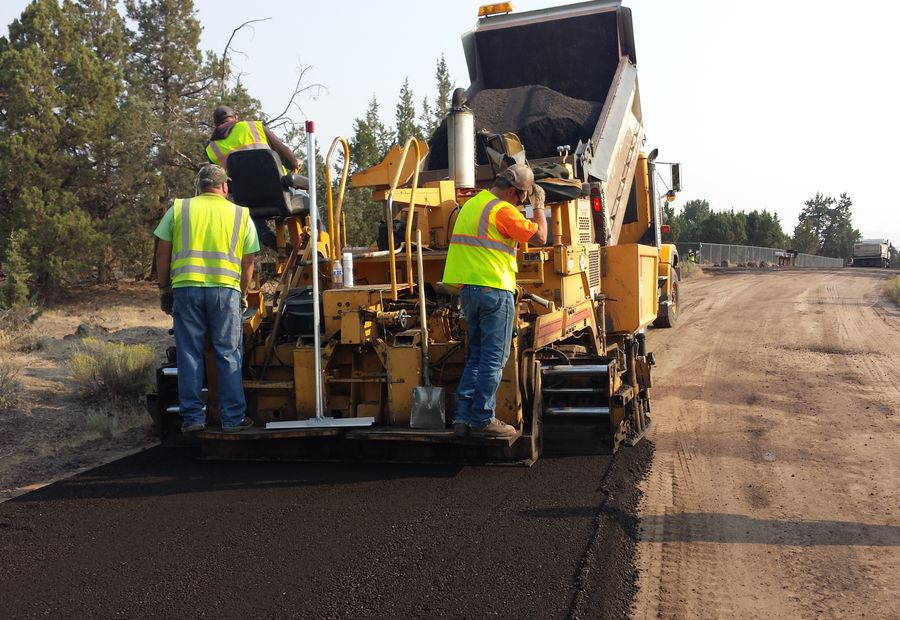
First-time paving starts with stakes and a level, not with asphalt. We set the shape, strip the topsoil, compact the subgrade, and proof-roll it. Anything that pumps or flexes comes out before a single stone goes down.
Geotextile fabric covers soft ground. Base stone goes in and gets compacted in lifts. The fall across the drive gets designed before anyone digs, because a flat driveway ponds and a ponding driveway fails. More on new driveway paving.
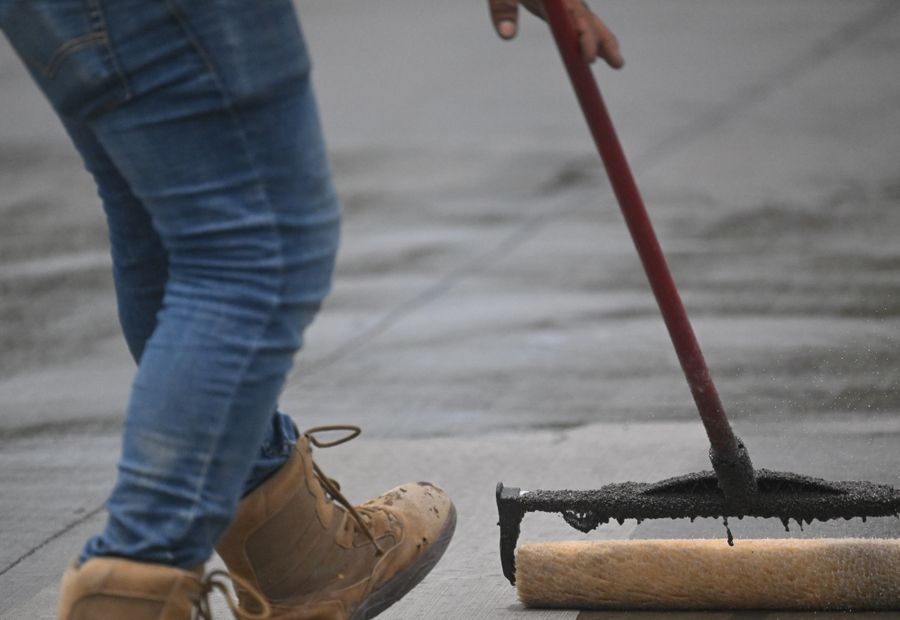
Sealcoating and Crack Filling
Sealer protects a sound surface from water and sun. It carries no load and it bridges nothing you can fit a finger into. On a driveway that is still solid it is money well spent every two to three years.
Cracks get cleaned and filled first, never after. New asphalt waits roughly six months to a year for its first coat. Yearly sealing builds up and peels off in sheets. More on sealcoating and crack filling.
Parking Lots and Commercial Paving
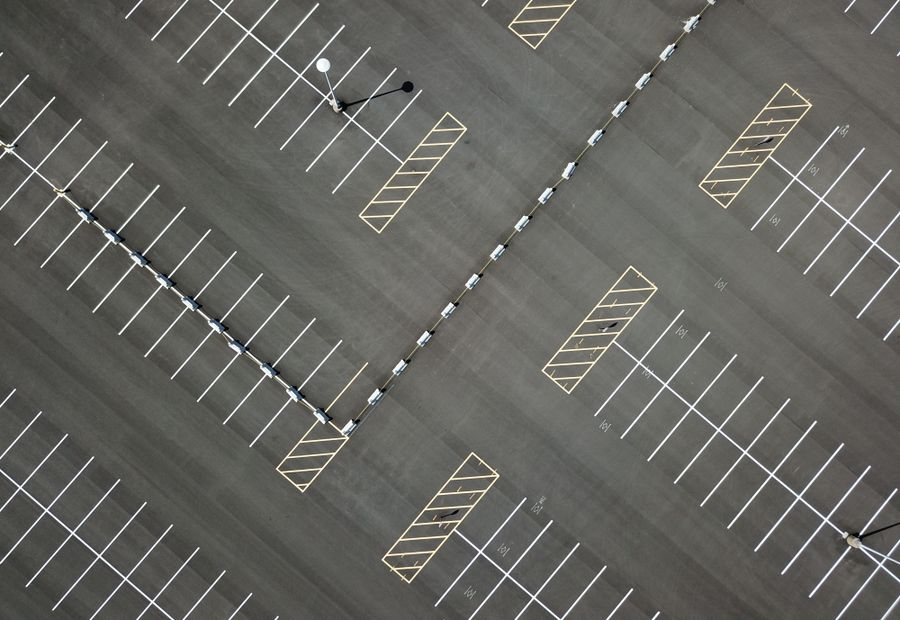
Trucks change the build. Drive aisles, dumpster pads, and delivery routes get deeper stone and thicker asphalt than a stall area needs. Catch basins get their rims reset and the broken ring around them rebuilt.
Work runs in phases so the property stays open, and nights and weekends are on the table. Boards and property managers get the phase plan in writing with the price. More on parking lot paving and repair.
Gravel to Asphalt Conversion
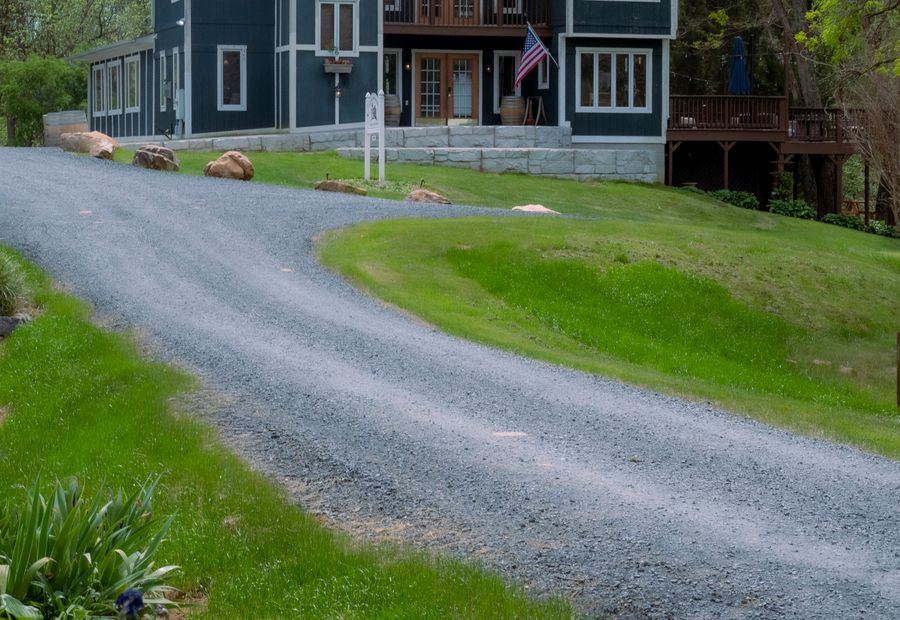
The gravel already on a lane is almost never a base. Rounded stone shifts under a roller instead of locking up, and most drives are thin where the tires run. It gets reclaimed and graded into the bottom of the new build.
Then crusher run goes over it and gets compacted properly. Ditches, shoulders, and the pipe at the road all get sorted, because asphalt sheds water faster than gravel ever did. More on gravel driveway conversion.
Driveway Extensions and Aprons
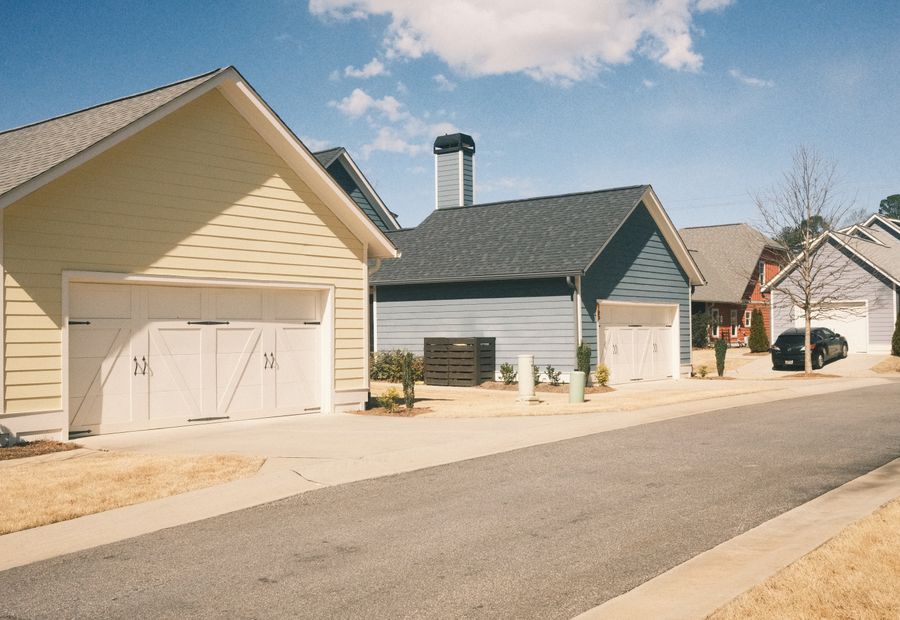
A second parking lane, a turnaround so nobody backs onto the road, a pad for a camper or a boat. The new section gets stone and two courses of asphalt, the same as a driveway, because it carries the same weight.
The old edge gets cut back clean, tacked, rolled tight against, and sealed. The seam will show. Built that way, it stays a line instead of becoming a crack. More on extensions and widening.
Why Erie Homeowners Call Us
- We check the base before quoting a price. That means a test hole or a core, not a look at the top. A driveway with solid stone under it gets an overlay. One without it gets a replacement. See asphalt driveway replacement.
- The quote says compacted. Hot mix loses about a quarter of its depth under the roller. A number without that word describes what came off the truck rather than what stays in your driveway.
- We measure your driveway and price it. Nobody knocks on your door with material left over from another job. The square footage, the base depth, and the asphalt depth go on paper before anyone starts.
- The edge gets built, not just cut. Base run past the asphalt, a raked and rolled taper, soil brought up level. In a city that plows this much, that detail decides how long an edge survives. See patching and repair.
- We will tell you to seal instead. If the surface is sound and the cracks are hairline, you do not need us with a paver. See sealcoating.
- We schedule against the plant calendar. Hot mix runs roughly May through October here. We quote all year and give you a real date rather than a hopeful one.
Why Asphalt Driveways Fail
Every paving company in this county will show you a photograph of a black driveway. Very few of them write down what is under it. Here it is.
The Base Fails, Not the Surface
Asphalt is a flexible pavement. It does not carry a car by itself. It spreads the load into the stone and the ground below, and it keeps water out of them. When the ground below starts moving, the asphalt above it has nothing to spread the load into. It bends, then it cracks in a connected web. That pattern is called alligator cracking and it is the plainest signal in this trade.
Nothing on Top Fixes Something Underneath
Sealer, crack filler, and a fresh overlay all sit above the failure. Lay new asphalt over a cracked drive and the old cracks travel up through it in the same lines, usually within a few years. That is reflective cracking. It is the most expensive lesson a homeowner learns in this trade, and it is entirely avoidable.
Lake Snow, Thaw, Freeze
Cold air crosses open lake water that is still warm into December, and it comes ashore loaded. Erie takes that snow by the foot rather than by the inch, and it sits. A thaw comes mid-winter, the meltwater runs into every crack and seam, and that night the temperature drops and the water freezes. Freezing water expands and lifts what is above it. Then it thaws and the asphalt does not come back down level. Run that cycle from December through March. The city runs a reporting line for the potholes it opens in the streets each spring. Your driveway takes the same beating without the public works crew.
Frost Works on the Base
The damage that ends a driveway happens below the asphalt. Water sitting in the subgrade freezes, swells, and lifts the whole slab. Clean, well-drained base stone holds far less water than the native dirt it replaced. That is the real argument for base depth in Erie County, and it is a stronger argument than rain has ever been.
Plows and Edges
Asphalt has no curb behind it. The edge carries wheels with nothing supporting the outside of it. Now add a steel blade scraping past that edge dozens of times a winter. An edge standing proud of the lawn with a drop-off behind it loses a piece every storm. An edge with the stone run past it, rolled to a taper, and the soil brought up level has nothing for the blade to catch.
Height at the Garage and the Street
An overlay adds about two inches to the driveway. That can crowd the bottom of a garage door and leave a lip where the drive meets the road. A replacement resets the grade instead. Nobody mentions this until the door will not close.
The Four Reasons a Cheap Driveway Fails
It is always the same four. Not enough compacted stone under it. Stone laid on soft or wet ground. Too little compacted asphalt on top. No fall for the water. Any one of them shortens a driveway. Together they finish one inside a handful of years.
How a Driveway Job Runs
Measure and Look Underneath
We measure the drive, walk the fall, and find where water goes after a rain. Then we open a test hole and look at the stone and the dirt below it.
Written Quote
Square footage, compacted base depth, compacted asphalt depth, what comes out, where it goes, and the price. One page, no surprises hiding in it.
Tear Out and Grade
The old surface comes off and leaves as reclaimed asphalt. We cut to depth, compact the subgrade, and dig out anything soft that shows itself.
Base Stone in Lifts
2A modified stone goes down in layers, each one rolled before the next arrives. Edges get worked with a plate compactor where the roller cannot reach.
Pave Hot, Roll Hot
Binder course first, then the surface course. Trucks are ordered so the mix arrives hot and the rollers stay behind the paver. Edges get raked and tapered.
What an Asphalt Driveway Costs Around Erie
Asphalt prices by the square foot. Measure the length and the width of your driveway, multiply them, and you have the number that starts every quote in this trade. What moves the price after that is depth, tear-out, and access.
| Work | Typical Range | Notes |
|---|---|---|
| Full-depth replacement, per square foot | $7 - $13 | Tear-out, haul-off, rebuilt stone base, two courses of hot mix |
| New driveway on bare ground, per square foot | $5 - $10 | No tear-out. Excavation depth and soft ground move it |
| Overlay or resurfacing, per square foot | $3 - $6 | Two inch surface course, milled edges, tack coat |
| Gravel drive converted to asphalt, per square foot | $5 - $11 | Reclaim and regrade, new base stone, ditch and pipe work |
| Full-depth pothole patch | $300 - $900 | Cut square, dug to solid ground, hot mix compacted in |
| Hot rubberized crack filling | $300 - $800 | Cleaned and routed first. Priced by the foot of crack |
| Sealcoating a residential drive | $200 - $600 | Every two to three years on a sound surface |
| Driveway extension or widening | $1,500 - $6,000 | Built to full depth, tied and sealed at the seam |
A short suburban drive in Wesleyville lands near the bottom of these bands. A long lane out toward Waterford or Girard, with soft ground and a pipe to replace at the road, lands near the top. Nobody prices a driveway accurately from a phone photo.
What moves the price:
- Total square footage, which sets the material order
- Compacted asphalt depth, and whether it goes down in one course or two
- Compacted base depth, and whether the old base can stay
- How much old material comes out and gets hauled away
- Grading, soft spots, and any fabric the ground needs
- Access for a triaxle and a paver, and how far the mix has to travel on site
- Drainage work, ditching, and a pipe at the entrance
Frequently Asked Questions
How much does a 2,000 square foot asphalt driveway cost?
Take the per square foot bands above and multiply. A full replacement at that size generally runs from roughly fourteen thousand into the mid twenty thousands, and a first-time pave on bare ground runs lower because nothing has to come out and nothing has to be trucked away. What actually moves your number is the asphalt depth, the base depth, how much old material gets hauled off, how much grading the lot needs, whether a triaxle and a paver can reach the work, and whether the water has somewhere to go. We measure, then we quote. National averages describe nobody's driveway.
Can you put a new layer of asphalt over old asphalt?
Yes, and on the right driveway it is the smart call. Three things have to be true first. The base under the old surface has to be solid, the drive has to shed water rather than hold it, and there can be no connected web of cracks and no ruts. Over a failed base the new layer cracks again in the same pattern within a few years. There is also a height problem almost nobody mentions: an overlay raises the driveway about two inches, which can crowd the garage door and leave a lip at the street unless the transitions get milled.
Is 2 inches of asphalt enough for a driveway?
Not on its own. Two inches compacted is the standard for an overlay or for the surface course of a new build, and it is exactly right in that role. A driveway wants three to four inches of compacted asphalt laid in two courses, sitting on six to eight inches of compacted stone. Both of those numbers are compacted numbers. Hot mix loses roughly a quarter of its depth under the roller, so a quote written in laid inches is describing the truck rather than the driveway.
How long does an asphalt driveway last?
Fifteen to twenty years is the answer, and a well-built drive that gets crack filled and sealed goes well past that. Construction decides it, not luck. The driveways that die young are thin on a poor base, and no amount of sealcoating rescues one. Our winter is the load that finds the difference. A driveway built properly shrugs at the freeze and thaw. A driveway built cheap does not survive many of them.
How often should you sealcoat a driveway?
Every two to three years suits this climate. More often is the common mistake here. Sealer builds up layer on layer, then cracks in fine lines and peels off in sheets, and stripping that back costs more than the sealing ever did. New asphalt waits roughly six months to a year for its first coat so it can cure. And keep the job description straight: sealer protects a sound surface and does nothing whatever for a failing base.
What causes alligator cracking in a driveway?
The base underneath has failed. Water got into it, or it was never deep enough, or it was never compacted properly, or the driveway is carrying more weight than it was built for. Often several of those at once. This is the one pattern that means replacement rather than resurfacing, because the failure is below the asphalt and anything laid on top of it is temporary. A patch buys a season. A new surface buys a few years and then shows the same map of cracks.
Asphalt or concrete driveway, which is better?
Both are good, and we will not pretend otherwise. Asphalt costs less up front, goes down in a day or two, flexes with frost movement instead of cracking hard, and takes patching and resurfacing easily. Concrete lasts longer, needs less attention, and costs more to install and more to repair when it does crack. In a freeze and thaw climate the flexibility of asphalt is a real advantage. We are an asphalt crew, so if you want concrete we will point you at somebody who pours it.
When can you pave a driveway?
Roughly May through October here. Hot mix leaves the plant hot and has to be laid and rolled before it cools, and on cold ground it will not reach density no matter how fast the crew works. The plants shut down for the winter, which settles the question. Measuring and quoting happen in any month, and winter is the right time to do it. The calendar fills from spring forward, so a July call is usually an August or September pave.
Do I need a permit to replace my driveway?
Replacing in place usually does not need one. Widening, extending, or touching the apron often does, because the strip between your property line and the road belongs to the city, the township, or the state. That approval can also carry a requirement about the pipe under your entrance. We confirm it with the road authority before anyone digs, and we tell you what came back. We will not guess at it on a website.
My driveway broke up over the winter. Is that normal?
It is common here and it is not something to ignore. Spring is failure season in Erie County. The frost comes out of the ground, the thaw runs water through every crack, and the drives that were going to break, break. Most of our replacement calls arrive in April and May for that reason. Call early, because the paving calendar starts filling before the plants even open.
Are you licensed and insured?
Yes. We carry Pennsylvania registration and liability insurance, and the paperwork goes to you, your board, or your property manager on request. Every job gets a written estimate first, showing the square footage, the compacted base depth, the compacted asphalt depth, and the price. You should ask for that from anybody who quotes your driveway.
Do you do commercial work?
Yes. Parking lots, private roads, church and apartment lots, and loading areas. Commercial pavement is built differently, because a loaded truck puts far more on the pavement than a car does, so the stone goes deeper and the asphalt goes thicker where the trucks run. Those jobs get phased so the property stays open. Everything else on this site is residential work, and that is most of what we do.
Driveways on the Erie Snowbelt
Erie sits on the south shore of the lake it is named for, and the water sets the winter. Cold air crosses open water that is still warm well into December, picks up moisture, and unloads it as heavy snow bands on the shore downwind. That is why Harborcreek, North East, and the eastern side of Millcreek get the weight of it. An average winter here buries this county, and a bad one buries it twice over.
Volume is only half the story. The other half is that our winters sit in the upper twenties with thaws mixed through them. Snow melts, the water runs into the cracks and seams of a driveway, and then the temperature drops and it freezes in place. Freezing water expands. It lifts the asphalt off its base, then lets it back down uneven. That happens over and over from December into March.
Then the plows come. This much snow means constant blade work on every road in the county, and it means a homeowner or a contractor scraping the driveway too. A steel edge passing a driveway edge that stands proud of the lawn takes material with it. Repeat that through a season and the edge is gone, which is exactly where most driveways in this county start dying.
Six of the townships around here bid their road maintenance materials together, asphalt emulsions and pavement sealing included, and they do it every year. Millcreek, Harborcreek, Fairview, Girard, North East, and Waterford are all in it. That is not trivia. It is a measure of how hard this climate works on pavement. Public roads get an annual program. A driveway gets whatever was built into it.
So the answer for Erie County is depth and drainage. A real fall so meltwater leaves the surface. Six to eight inches of compacted stone so the water that does get down there drains instead of freezing in native dirt. Three to four inches of compacted asphalt in two courses. An edge built to a taper. That driveway rides out the same winter that takes a thin one apart in five years.
Asphalt Paving Across Erie County
We pave driveways across Erie County and the northwest corner of Pennsylvania. That covers the city itself, the big suburban township on its west side, the lakeshore townships running east and west of it, the boroughs on the east side of the metro, and the towns inland to the south. Call us with a driveway in any of them.
Ready for a Number on Your Driveway?
Call (814) 555-0131 for a free estimate. Tell us roughly how long and how wide the driveway is, what it is made of now, and what the cracks look like. Say whether water sits on it after a rain. We will tell you straight whether you are looking at crack filling and sealer, a patch, an overlay, or a full replacement. We measure and quote in any month, and we pave once the plants open.