New Asphalt Driveway Paving in Erie, PA
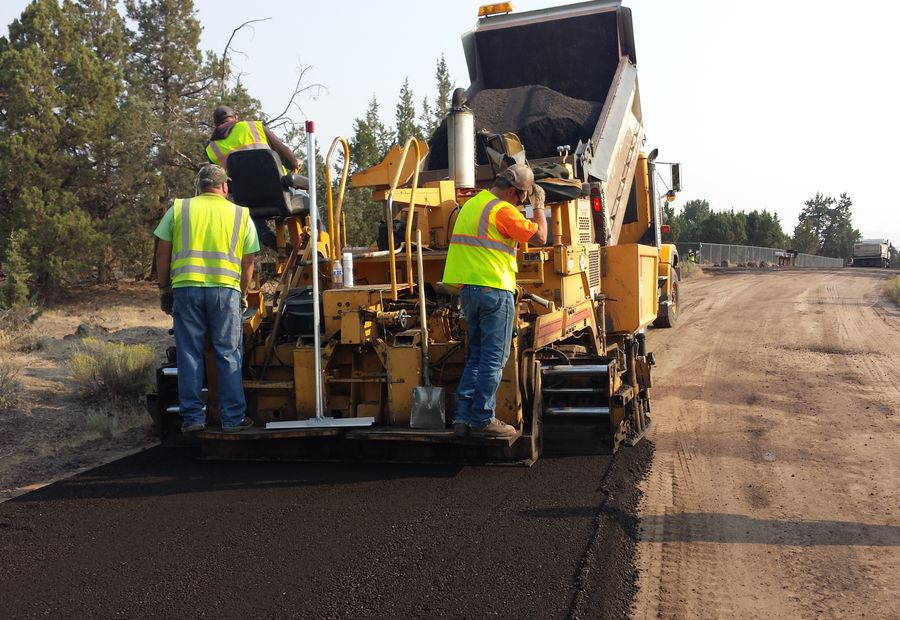
Erie Driveway Paving is a paving contractor building new asphalt driveways on raw ground across Erie, Millcreek, Fairview, Waterford, Edinboro, and Erie County, Pennsylvania. We lay out and pave first-time drives, parking pads, turnarounds, and long rural lanes. We also replace, resurface, repair, seal, and widen existing asphalt.
A new drive is built from the dirt up. We stake the layout, strip the topsoil, and compact the subgrade, then proof-roll it and dig out anything that moves. Geotextile fabric goes over soft ground. Roughly six to eight inches of 2A modified stone follows in lifts, each one worked with a vibratory plate compactor at the edges and a roller through the middle. Hot mix asphalt lands in two courses, a coarse binder course carrying the load and a finer surface course on top. The alternative you will see quoted is two inches of asphalt on whatever dirt happened to be there.
Layout Comes First
We walk the property with the customer and stake the shape. Width for two cars passing, a turnaround where backing onto the road is a bad idea, room for the trash cans, and a generous radius at the street so a delivery truck does not clip the corner. Fixing a narrow driveway later means a seam. Getting it right first means no seam at all.
The Ground Decides the Price
Topsoil, tree roots, and old fill all have to leave. Ground that holds water needs more stone or a drain. A lot with easy access for a triaxle and a paver costs less to build than one where every load gets carried in. None of that shows in a photo, which is why we price at the property.
Culverts, Aprons, and the Road
Where a drive meets a township or state road, the tie-in has to shed water and match the pavement it joins. Some connections need a pipe under the entrance so the roadside ditch keeps running. Work in the right-of-way belongs to the road authority, so we confirm what your township or the state wants before anyone digs.
Curing and the First Season
Fresh asphalt takes cars the next day and hardens over the following months. Keep heavy trucks off it. Move the parking spot around for the first few weeks. Put a board under a trailer jack or a motorcycle stand. The first sealcoat waits roughly six months to a year, because new asphalt has to cure before anything coats it.
Getting on the Calendar
Paving runs roughly May through October in Erie County. Excavation and base work can start earlier once the frost is out. The schedule fills from spring forward, so a summer call is usually an August or September pave. Call (814) 555-0131 for a measured quote.
How deep do you dig for a new driveway?
Deep enough to fit the stone and the asphalt without raising the finished height above the garage floor or the street. On a residential drive that usually means cutting down about ten to twelve inches of dirt. Soft ground takes more, because the soft material has to leave before anything gets built on it. The depth is set at the site, not in an office.
What is proof-rolling?
We run a loaded truck or a heavy roller across the compacted dirt and watch it. Ground that flexes, pumps water to the surface, or leaves ruts is not ready to carry a driveway. Those areas get dug out and replaced with stone, sometimes with fabric under it. It takes twenty minutes and it finds the trouble while it is still cheap to fix.
Do I need fabric under the stone?
You need it where the subgrade is soft, wet, or clay-heavy. Geotextile fabric is a separation layer. It keeps clean base stone from working down into mud and it keeps mud from working up into the stone. Without it, a stone base slowly disappears into the ground beneath it and the depth you paid for is no longer there.
Where does the water go on a brand new driveway?
That gets decided with stakes and a level before anyone digs. A drive needs a real fall across its width or down its length so rain runs off. Long or steep drives may need a swale at the top, a trench drain, or a culvert at the road. Designing the fall first is far cheaper than fixing a flat driveway that ponds.