Asphalt Resurfacing and Overlays in Erie, PA
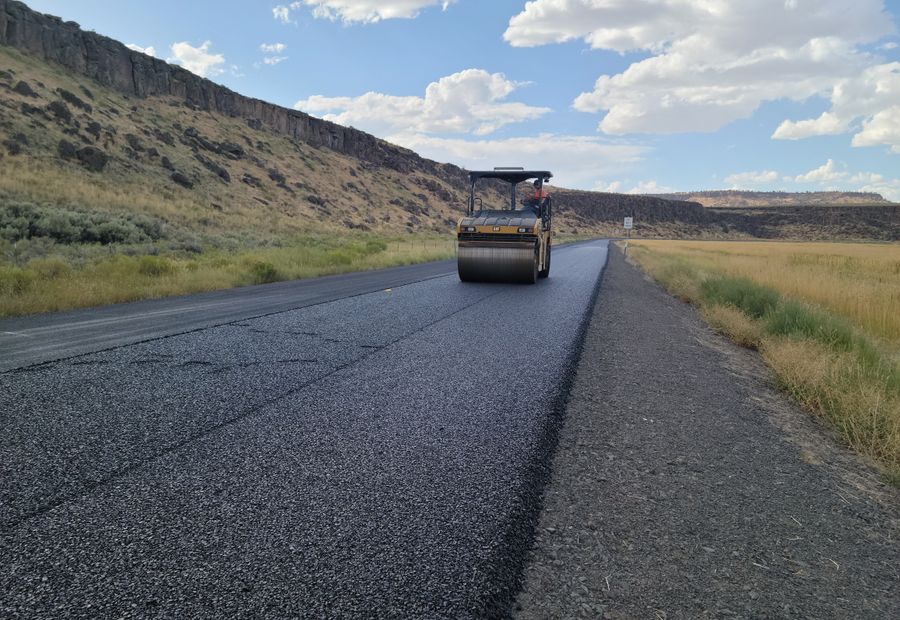
Erie Driveway Paving resurfaces asphalt driveways, private lanes, and small lots throughout Erie, Millcreek, Wesleyville, Harborcreek, Waterford, and Erie County, Pennsylvania. We also do full replacement, patching, new paving, sealcoating, gravel conversion, and driveway widening. Every overlay starts with a look at what is under the surface, because an overlay borrows the strength of the driveway it lands on.
Our overlay work runs the same order every time. Failed sections come out first and get patched full depth. Edges and transitions get milled so the finished height stays where it was. Then a sprayed coat of asphalt emulsion, called tack coat, wets the old surface so the new mat bonds to it rather than sitting on it. A surface course of hot mix asphalt goes down about two inches compacted and gets rolled hot. Old material milled off the drive leaves as reclaimed asphalt pavement.
When an Overlay Is the Right Call
Three conditions have to hold. The base underneath has to be solid. Water has to run off the driveway instead of sitting on it. And the cracking has to be ordinary, meaning straight cracks and weathering rather than a connected web. Drives like that are common around Erie. They were built properly, they carried twenty winters, and the top has simply worn out.
When It Is Money Burned
Alligatored surfaces, ruts under the tire tracks, standing water, and sections that have dropped all point at the ground below. New asphalt laid on that comes apart in the same lines it came apart before. The old cracks migrate up through the new layer, which is reflective cracking, and it usually shows up inside a few years. We say so at the quote rather than after the roller leaves.
Milling the Edges
A cold planer grinds a set depth off the asphalt at the garage, the apron, and any walkway. That recess gives the new mat somewhere to finish flush. Without it the driveway gains two inches at every one of those points. Garage doors then catch on the slab, and the street edge picks up a ridge that a plow blade can grab.
Patch First, Pave Second
Any spot that has failed gets cut square, dug out to solid ground, and filled with hot mix compacted in place before the overlay goes down. Skipping that step puts a thin new layer over a hole. The hole wins.
Season and Booking
Overlays follow the same calendar as everything else here. Plants make hot mix roughly May through October, and cold ground stops a mat reaching density. Winter is when the driveway gets measured, cored, and put on the spring list. Call (814) 555-0131 and describe what the cracks look like. That conversation usually gets you most of the way to an answer.
What is the difference between an overlay and a replacement?
An overlay adds a new layer on top of the driveway you already have. A replacement takes the old driveway away and rebuilds the ground under it before anything black goes down. An overlay is cheaper and quicker, and it only works when the layer underneath is still doing its job. The old surface becomes part of the new driveway, so whatever is wrong with it becomes your problem again.
How long does an overlay last?
On a sound, well-drained base, plan on a good ten to fifteen years, and longer with crack filling and sealer. On a base that is already moving, expect the old crack pattern to show through in a small handful of years. That gap is why we look under the surface before quoting. Nobody can promise a number for a driveway they have not opened up.
Does the driveway get taller?
Yes, by about two inches unless we mill. That matters at three places: the bottom of the garage door, the apron where the drive meets the street, and any walkway or step alongside it. We grind a taper at those transitions so the new surface finishes flush. A quote that skips milling is a quote that leaves you with a lip and a puddle.
Can you overlay part of a driveway?
We can, and the seam will show. A cold joint between old and new asphalt is a line that water works at, so it gets sealed and it gets watched. Partial work makes sense when one half of the drive is failing and the other half is genuinely sound. It makes less sense when it is simply a way to make the price smaller today.