Asphalt Driveway Repair in Erie, PA
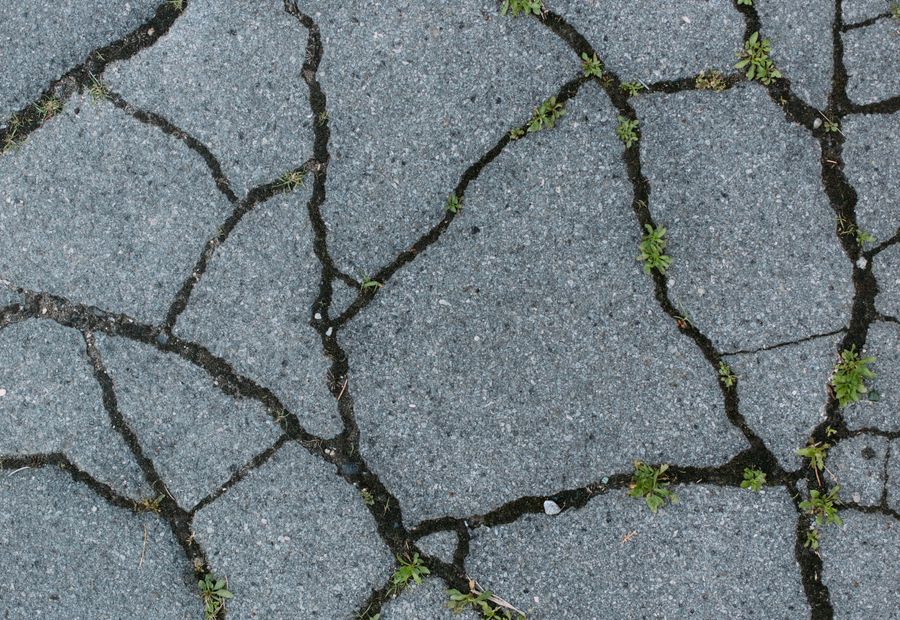
Erie Driveway Paving is an asphalt contractor doing driveway repair across Erie, Millcreek, Wesleyville, Girard, North East, and Erie County, Pennsylvania. We patch potholes, fill working cracks, cut out sunken sections, rebuild aprons and crumbled edges, and repair trench cuts left behind by utility work. We also handle replacement, resurfacing, sealcoating, and new paving when repair stops making sense.
A permanent pothole repair is cut square with a saw, dug down to ground that holds, and filled with hot mix asphalt compacted in place. Working cracks get cleaned out and filled with hot rubberized crack filler, melted and poured hot so it bonds to both faces and stretches as the crack opens and closes. Cold pourable filler out of a jug skins over and pulls away from the sides. That difference is why one repair lasts several seasons and the other lasts until the next thaw.
Potholes Start Underneath
A pothole is a hole in the base that finally reached the surface. Water gets through a crack, sits in the stone, freezes, and lifts the asphalt above it. Traffic breaks the lifted piece loose and the hole opens. Throwing mix into it without digging leaves the cavity. That is why the same pothole comes back in the same square foot year after year.
Erie Winters Do This on Purpose
Snow off the lake sits on a driveway, melts in a thaw, runs into every crack, then refreezes that night. Repeat that from December through March. The city runs a reporting line for the potholes the same cycle opens in its streets each spring. A driveway takes the identical beating and gets no public works crew.
Edges and Aprons
Asphalt has no curb behind it, so the edge carries wheels with nothing supporting the outside. Add a steel plow blade catching a lip that stands above the lawn and the edge crumbles a little further every storm. We cut the ragged edge back to sound material, rebuild the stone under it, and rake and roll a taper with the soil brought up to meet it. Aprons at the street get the same treatment, plus attention to how water crosses them.
When Repair Stops Paying
Count the patches. Once a driveway needs work in several separate places, the drive is not failing in spots, it is failing generally. At that point the patch money is a down payment on a replacement you will still need. We say which one you are looking at, and we are happy to be told the budget first so the answer is useful.
Booking Repairs
Patching follows the hot mix calendar, roughly May through October. Crack filling has a wider window. Estimates happen all year. Call (814) 555-0131.
Is cold patch a real fix for a pothole?
It is a stopgap and a good one for winter. Cold patch comes in a bag, goes in without heat, and holds a hole together until a crew can do the job properly. It never bonds to the sides of the hole the way hot mix does, so traffic and plows work it loose over a season or two. Use it in February. Replace it in June.
Which cracks are worth filling?
Filling pays on straight, isolated cracks roughly a quarter inch to an inch wide. Below that, sealer covers it. Above that, the crack usually has a wider fault behind it. Connected cracking in a web is not a filling job at all, because the ground under it has already given up. Filling a web of cracks buys appearance, not time.
My driveway has a dip that holds water. What is under it?
Almost always a soft spot in the ground below the stone. Something got wet and stayed wet, or the base was never compacted there, or a utility trench was backfilled loose and settled. Filling the dip with asphalt levels the surface and leaves the soft spot in place. The honest repair digs the section out, fixes what is under it, and rebuilds upward.
The gas company cut a trench across my driveway. Can that be repaired properly?
Yes. A trench cut gets squared up wider than the trench itself, so the new patch sits on ground that was never disturbed at the edges. The backfill underneath gets compacted in lifts, not dumped. Then hot mix goes in and gets rolled. A trench patch dropped straight onto loose fill sinks, and the seam opens the first winter after.