Driveway Sealcoating and Crack Filling in Erie, PA
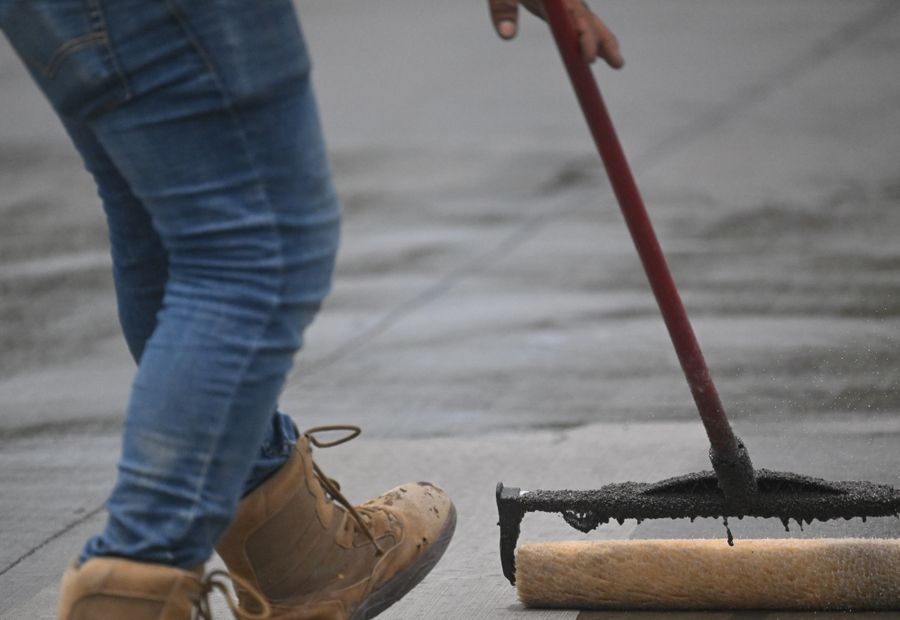
Erie Driveway Paving seals and crack fills asphalt driveways, private lanes, and commercial lots in Erie, Millcreek, Harborcreek, Wesleyville, Girard, and Erie County, Pennsylvania. Sealcoating sits alongside our replacement, resurfacing, repair, new paving, and widening work, and we will tell you plainly when a driveway is past the point where sealing helps.
Our sealing work runs in one order. The surface gets blown clean and scrubbed at the oil spots. Working cracks get filled with hot rubberized crack filler, poured hot so it grips both faces. Then asphalt emulsion sealer goes down in thin, even coats and gets kept off the garage floor, the walkway, and the lawn. Sealer protects a sound surface from water and sun. It carries no load, fills nothing structural, and adds no strength to the driveway underneath it. Anyone selling it as a repair is selling paint for a broken bone.
What Sealer Actually Does
Asphalt fails at the top from oxidation. Sun and air stiffen the binder holding the stone together, the surface turns gray, and small stones start letting go. That is raveling. A coating slows it and keeps water out of a tight surface. On a driveway that is still solid, that is worth doing on a regular cycle for a modest price.
Too Much Sealer Is a Real Problem
Coatings build. Every layer sits on the one before it, and past a certain thickness the stack behaves like a skin rather than part of the pavement. It cracks in fine lines, then lifts and peels in patches, and it looks worse than bare asphalt did. Stripping that back off costs more than the sealing did.
Fill the Cracks First
Cleaning comes before filling. A crack packed with dirt, grass, and old sealer gives the filler nothing to bond to. We rout or blow the crack out, dry it, then pour. Hot rubberized filler stays flexible through a winter of opening and closing. Cold filler from a jug shrinks as it dries and pulls off the sides.
Timing Around the Weather
Sealer needs a dry surface, warm air, and a dry night behind it. Rain on a fresh coat takes it off the driveway and puts it in the lawn. Plan on staying off it for a day, and keep cars off a little longer in cool weather. Erie hands out very few perfect sealing days in October, so the good windows go quickly. Call (814) 555-0131 to get on the list.
How often should a driveway be sealed?
Every two to three years suits this climate. Let the surface tell you rather than the calendar. Black and tight means wait. Gray, dry, and showing the stone means it is time. Sealing on a yearly habit is the common mistake here, and the coating gets thick enough to crack and peel off in sheets.
My driveway is brand new. Can I seal it now?
Give it roughly six months to a year first. New hot mix still has to cure, and a coating applied over uncured asphalt traps what is trying to leave. There is no benefit to rushing it either, since a new surface course is already tight and doing exactly what sealer is meant to help with.
Squeegee or spray?
A squeegee pushes sealer into the surface and works better on rough, older asphalt. Spray lays a more even film and covers a large area faster, so lots often get sprayed. Plenty of crews spray and then back-squeegee, which gets both. What actually decides the result is surface preparation and how thin the coat goes on.
Will sealer hide my cracks?
It will darken them for a few weeks and then they come back through. Sealer is a thin coating. It bridges nothing you can fit a finger into. Cracks get cleaned and filled before any sealer touches the driveway, never after, because sealer over an open crack simply flows into it and sinks.